English
 Français
 Español

Bi-Directional RCBO for Solar PV Systems: Practical Guide
I’ve learned the hard way that the phrase “it’s just a small residential system” can be an expensive sentence. Once you add modern inverters, battery storage, and sometimes an EV charger, current flow is no longer a one-way story. That’s exactly where a bi-directional RCBO enters the conversation.
This post is written for installers, EPC teams, and technically curious buyers who want a practical way to think about selection. I’ll keep it honest: if something depends on local code, site conditions, or the utility connection rules, I’ll say so.
Why bidirectional changes protection choices
In classic AC distribution, current direction is pretty predictable: from the grid to the loads. In a PV + storage system, that assumption breaks. The inverter can supply loads, charge batteries, export to the grid, and sometimes absorb power depending on operating mode.
When direction can reverse, protection devices may see different stress profiles and fault scenarios. The right response isn’t “use the biggest device”; it’s choosing devices that are designed and tested for the way energy really moves. If you’re building a protection stack, it’s also worth mapping related components in the same family: RCBOs, RCCBs, MCBs, and surge protection devices.
Here’s a concrete example from ETEK’s catalogue that’s built around the bidirectional use case:
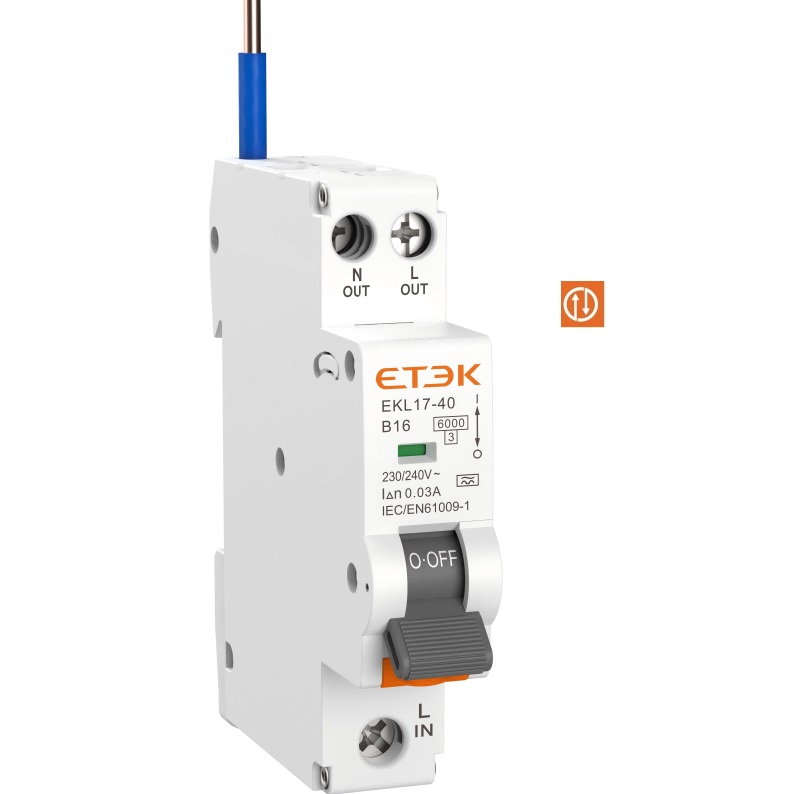
That’s the EKL17-40 Bi-Directional RCBO. I’m not going to invent performance numbers here; instead, treat this image/link as your anchor to the official product page.
What an RCBO actually does (in plain terms)
An RCBO combines two protective functions in one device:
- Overcurrent protection (similar to an MCB): helps protect cables and downstream circuits from overload/short-circuit conditions.
- Residual current protection (RCD function): helps reduce shock risk by detecting leakage current to earth.
In practice, installers like RCBOs for branch circuits because they can keep fault isolation more granular. Instead of “one RCD trips and everything dies,” you can limit the impact to the affected circuit.
If you’re unsure where RCBO fits among other building blocks, start from ETEK’s product navigation: Power Distribution & Circuit Protection and the broader Products overview.
A selection checklist that matches real sites
When I’m doing a quick-but-serious selection pass, I don’t begin with a brand name. I begin with a small checklist and let the system requirements tell me what’s safe and what’s just convenient.
- System topology: grid-tied only, PV + battery, or PV + battery + backup loads panel?
- Earthing arrangement: this is not a “nice-to-have detail.” It affects device selection and wiring.
- Inverter characteristics: residual current behavior can differ by inverter design and operation mode.
- Discrimination/selectivity goals: decide what you want to trip first during a fault event.
- Local code compliance: always check the applicable electrical code and the project’s inspection requirements.
If your project is UK-focused, ETEK lists a second bidirectional model explicitly positioned for UK practice:
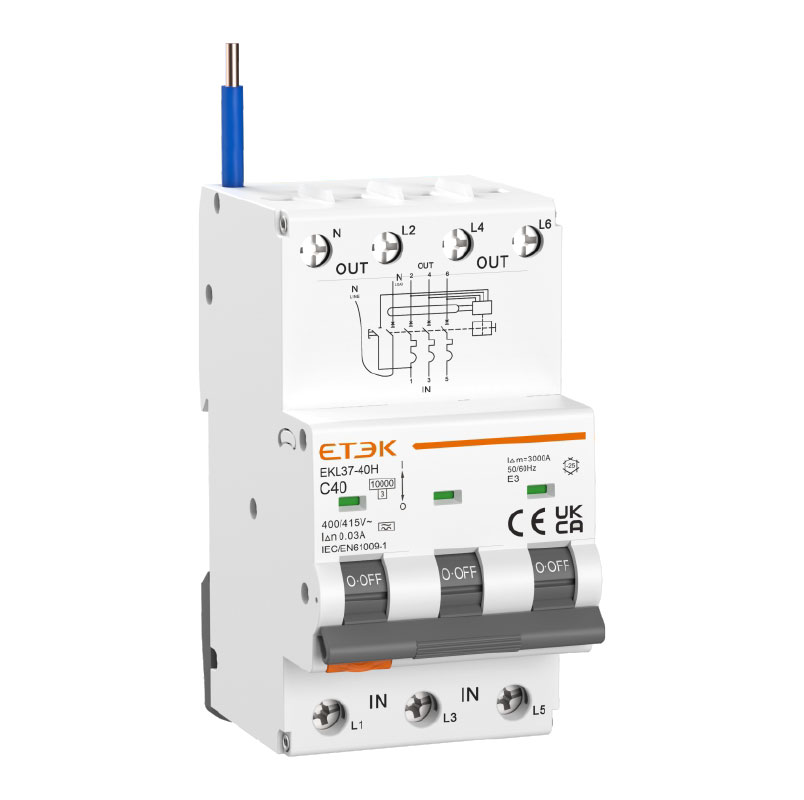
That’s the EKL37H-40 3P+N Bi-Directional RCBO. If you’re comparing devices, use the official product pages as your source of truth for ratings and certifications.
Installation notes and common mistakes
These are the “I wish someone said it out loud” points that come up in commissioning:
- Labeling matters: when circuits can be supplied from multiple sources (grid/inverter/battery), labeling is not paperwork—it’s safety.
- Neutral/earth discipline: mixing neutrals across circuits, or bonding in the wrong place, can create nuisance trips or mask real faults.
- Test the RCD function: don’t assume it’s fine because the breaker toggles on/off.
- Plan surge protection: PV sites are exposed; surge protection is often part of an “it worked for two years… until it didn’t” story.
If your project includes PV distribution hardware, you’ll typically be pairing circuit protection with PV-side components. ETEK groups those under Photovoltaic Power Distribution Solutions, including AC/DC SPD, DC isolator switches, and combiner boxes.
Where it fits in PV + storage (and sometimes EV)
In the real world, “solar PV system” often becomes “home energy system.” People add storage, then later add EV charging. From a protection viewpoint, that means you should stop thinking in single-line diagrams and start thinking in scenarios: normal operation, backup mode, export limitation, and fault conditions.
EV charging is its own domain, but it shows the same theme: high power, long duty cycles, and strict safety expectations. If you’re also responsible for EV infrastructure, ETEK’s catalogue includes DC fast charging stations. Here’s one example from their product list:
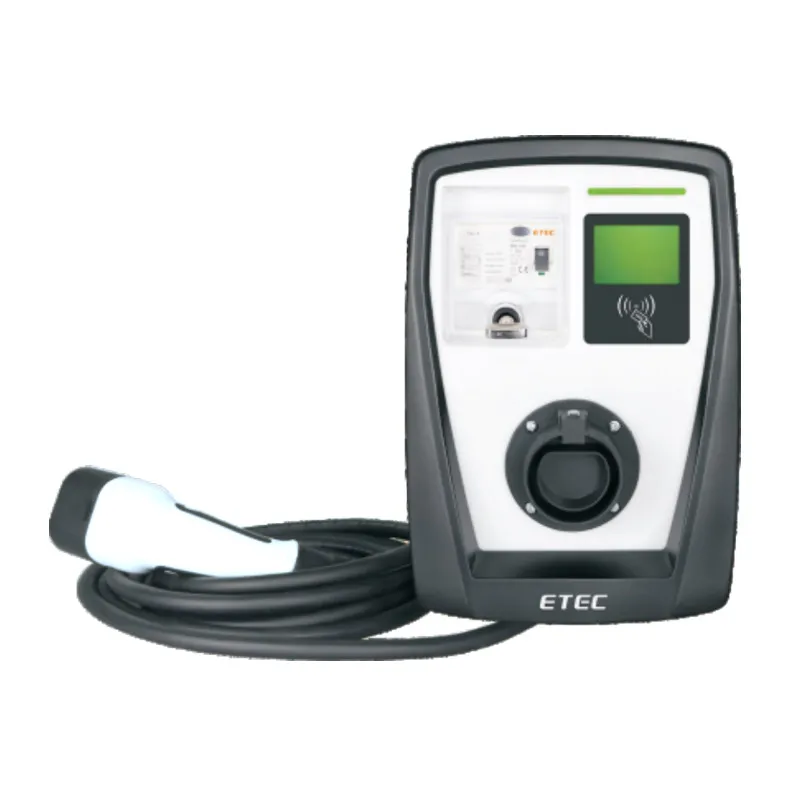
That link points to EKDC1 20–60kW DC Fast Charger. I’m including it because many PV + storage projects now touch EV charging, even if only in planning.
FAQ
Do I always need a bi-directional RCBO for solar?
Not always. The “right” answer depends on system architecture, local rules, and what the device is protecting. If you’re unsure, treat bidirectional capability as a design constraint and confirm with the inverter documentation and code requirements.
Is an RCBO the same as an RCCB?
No. An RCCB provides residual current protection only. An RCBO combines residual current protection with overcurrent protection.
Where should I read more about the standards side?
Standards are jurisdiction-specific. For a neutral starting point, see the International Electrotechnical Commission website: IEC (International Electrotechnical Commission).
If you want, tell me your target market (UK/EU/AU/Middle East/etc.) and whether this is PV-only or PV + storage. I can adapt the checklist section to match the most common inspection expectations in that region without making up device ratings.